Contrasts and Opposites in the Play Tughlaq by Girish Karnad
There are contrasts and opposites in the Play Tughlaq by Girish Karnad. Girish Karnad’s Tughlaq presents a striking tension between the ideal and the real, capturing the clash between the Sultan’s lofty vision and the grim political circumstances of his reign.
Read morePoem An Introduction by Kamala Das—Summary and Critical Appreciation
In her autobiographical poem “An Introduction,” Kamala Das reflects on her defiance of patriarchal and societal constraints in postcolonial India as she strives to establish her own identity as both a woman and a writer.
Read moreA Hot Noon in Malabar, Summary and Critical Analysis
Kamala Das’s poem “A Hot Noon in Malabar,” from her 1965 collection Summer in Calcutta, captures the essence of a sweltering afternoon in Malabar to reflect on themes of nostalgia, lost innocence, and displacement.
Read moreForest Fire by Kamala Das, Summary and Critical Appreciation

In Kamala Das’ “Forest Fire,” the poetess likens her boundless yearning for life’s experiences to a raging forest fire that devours everything in its way.
Read moreThe Ghaghra in Spate by Keki N. Daruwalla, Summary and Critical Analysis
Keki N. Daruwalla’s poem “The Ghaghra in Spate” vividly captures the fierce and devastating power of the Ghaghra River during its seasonal floods in northern India.
Read moreMy Grandmother’s House by Kamala Das, Summary and Critical Analysis
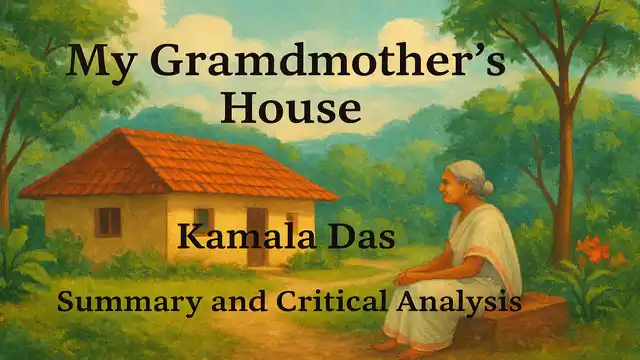
In her poem “My Grandmother’s House,” Kamala Das revisits memories of her ancestral home and her late grandmother.
Read moreDeath of A Bird by Keki N. Daruwalla Summary and Critical Analysis
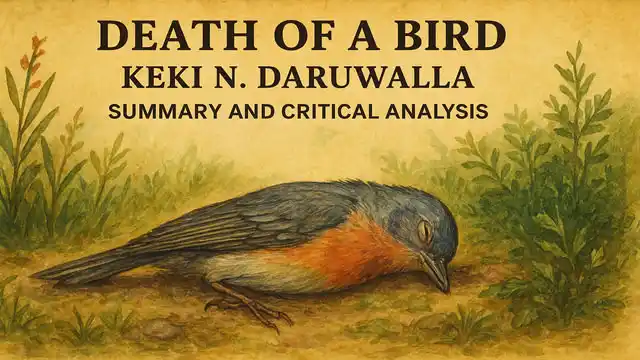
“Death of a Bird” by Keki N. Daruwalla is a narrative poem that tells the story of a man who, during the bird’s mating season, mistakenly kills a male monal.
Read moreArt of Characterization of Mulk Raj Anand

Art of characterization of Mulk Raj Anand is great and praise-worthy. Mulk Raj Anand is a superb master in the art of characterization.
Read moreNovel The Guide Is Known As Indian Regional Novel
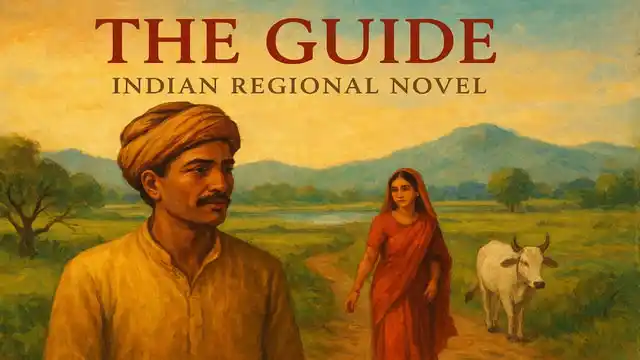
Novel The Guide is known as Indian regional novel. R. K. Narayan’s The Guide (1958) stands as one of the finest examples of the Indian regional novel written in English.
Read moreLove Sex and Marriage in the Novel The Guide

Love Sex and Marriage in the Novel The Guide form an important part in the story of the novel. Rosie comes to Malgudi with her husband Marco. Her slender and beautiful, and enchanting personality attracts Raju.
Read more