The Play Tughlaq Is Known As A Tragedy of Political Intrigue
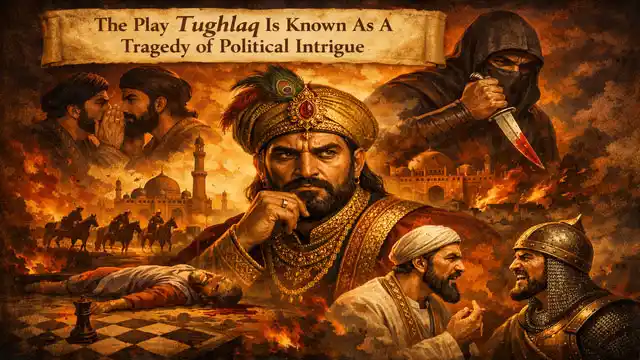
The play Tughlaq Is known as a tragedy of political intrigue. Girish Karnad’s Tughlaq is a powerful historical play that presents the reign of Sultan Muhammad bin Tughlaq as a complex tragedy shaped by political ambition, idealism, and continuous intrigue.
Read morePlot Structure of the Novel Heat and Dust
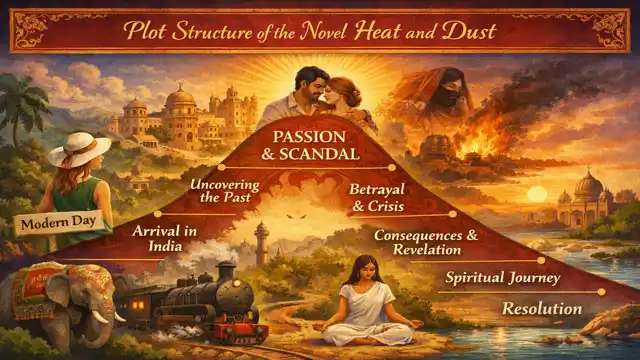
There is well-knitted plot structure of the novel Heat and Dust. After reading Heat and Dust, it becomes clear that the novel essentially traces the life and personality of Olivia and her husband Douglas.
Read moreThe Role of the Tannery in Nectar in a Sieve

There is the role of the tannery in Nectar in a Sieve. In Nectar in a Sieve, Kamala Markandaya presents the tannery as a powerful symbol of change that intrudes upon the quiet, traditional life of an Indian village.
Read moreTughlaq by Girish Karnad Is A Remarkable Historical Play

Tughlaq by Girish Karnad is a remarkable historical play in which history is not merely reconstructed but critically reinterpreted to reflect deeper political and psychological realities.
Read moreRabindranath Tagore Is Known A Great Lyric Poet
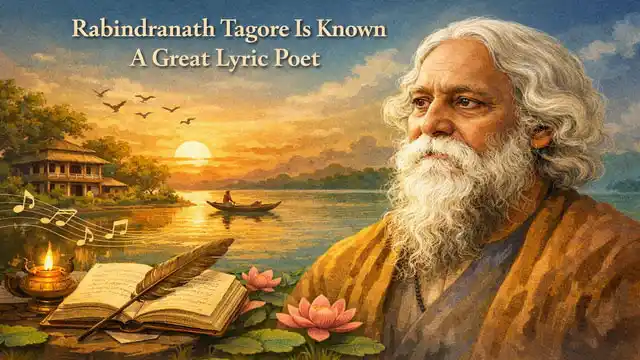
Rabindranath Tagore Is known a great lyric poet of modern literature. His poetry reflects an intense personal vision expressed with simplicity, music, and emotional depth.
Read moreArtistic and Narrative Techniques in Indo-Anglian Fiction
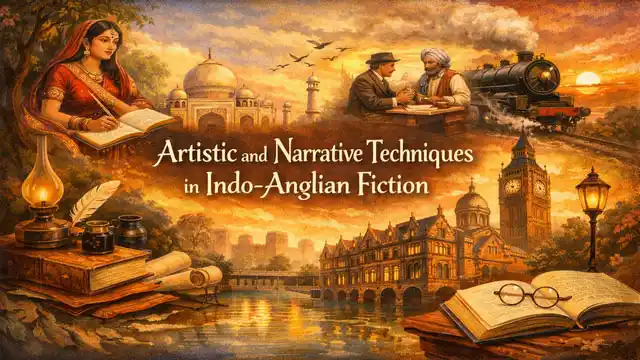
There are artistic and narrative techniques in Indo-Anglian Fiction. In the modern novel, technique occupies a central place in the concerns of Western writers and is regarded as an essential element of fictional art.
Read moreImportant Themes in Indo-Anglian Fiction
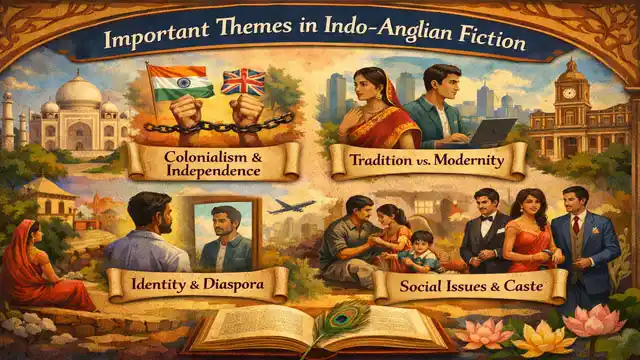
There are many important themes in Indo-Anglian Fiction. In the early stage of the Indian English novel, which was predominantly Romantic in spirit, writers largely turned to history as their chief subject.
Read moreSalient Characteristics of Indo-Anglian Fiction

There are salient characteristics of Indo-Anglian Fiction. The Indian novel written in English emerged during the final three decades of the nineteenth century.
Read moreA Critical Survey of Indian Poetry in English up to 1980

Here is a critical survey of Indian Poetry in English up to 1980. Indian-English poetry emerged in an atmosphere of difficulty and developed through a long and uneven course.
Read moreSailing to Byzantium by Yeats, Summary and Critical Analysis

The poem “Sailing to Byzantium” appears in Yeats’s collection The Tower, published in 1928.
Read more