Introduction:
There is Colonialism and Cultural Conflict in The Mystic Drum. The poem The Mystic Drum by Gabriel Okara explores the deep impact of colonialism on African identity and culture. Through rich symbolism and lyrical expression, the poem presents the transformation of a simple, harmonious life into one filled with confusion and inner conflict. The “mystic drum” represents traditional African culture—pure, rhythmic, and deeply connected to nature—while the arrival of the “stranger” symbolizes the influence of colonial powers and Western civilization.
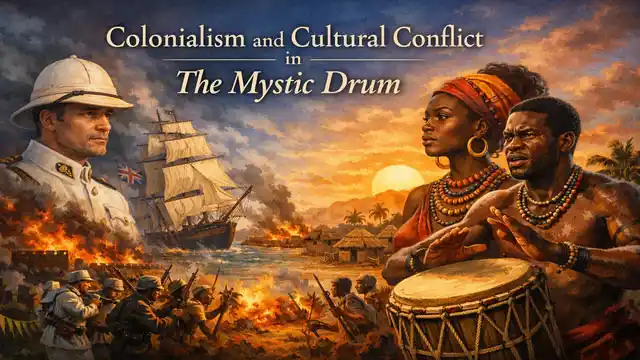
As colonial ideas and values begin to replace indigenous beliefs, the speaker experiences a loss of cultural innocence and unity. This cultural intrusion creates a sense of alienation, disrupting the balance between the individual and their heritage. Thus, the poem becomes a powerful reflection on how colonialism not only dominates physically but also reshapes the cultural and psychological identity of the colonized people.
Multiple Interpretations of the Poem:
Gabriel Okara’s The Mystic Drum can be read on three levels. It is a love lyric. The love meets its tragic end at the end. Second level is the three stages of knowledge we pass through, conventional knowledge, intimate knowledge, and the knowledge gained through experience. The third level of reading is colonialism that is main point. The beating of drum in African culture often symbolises the celebration or ritual, but in the poem, the drum is beating inside the head of the narrator. The native men and women dance on the tune of the drum. In the second stanza, the imperial element is introduced in the form of woman wearing leaves around her waist:
“But standing behind a tree
with leaves around her waist
she only smiled with a shake of her head.”
Silent Observation and Growing Influence:
It is not suggested directly but once we read the entire poem, it becomes evident that she is a symbol of colonialism. She just observes the happening with the smile and shake of her face. The narrator continues his beating of drum. The change in the surrounding is beautifully portrayed. It is so compelling that even the dead bodies arise from the grave and begin to dance. But the lady behind the tree is standing still, with a smile on her face. The tempo of the drum beating increases. In the beginning, people begin dancing then dead ones and now it is the time for the natural elements such as sun, moon, the river gods, and the trees to join the party. But the colonial symbol, lady with leaves around her waist is still. It shows how the colonial power first observes before infiltrating their roots in the native lands. They just see the country, people’s behaviour and form the plan of how to rule over it. They search the weakness. Native welcomes them, ignores them, or cannot recognise them at first. In that very moment, they grab the chance to rule over the native land. In the next stanza, the conversation of the human into animal and vice-versa is narrated. The border between human and nature is diminished:
“The fishes turned men
and men turned fishes
and things stopped to grow.”
Colonial Seduction and Destruction:
The innocence prevails above everything. Once the beating stops, the rationality of the Western world lands and they start their ruling. The imperial eve seduces the native showing her half-eaten apple of science and progress. She wants them to commit the same crime she is suffering the consequence of. ‘Root sprouting from her feet’ symbolises the western poisonous tree cementing its place quickly and firmly. ‘Smoke in her nose’ suggests the industrialization that West brings in the native. It pollutes the clean and environment in the name of development and progress. The lips part and what the narrator sees is the ‘cavity belching darkness’.
“And behind the tree she stood
with roots sprouting from her
feet and leaves growing on her head
and smoke issuing from her nose
and her lips parted in her smile
turned cavity belching darkness.”
Realisation and Withdrawal:
Seeing the bad result of his beauty, possibly the narrator believes his drum beating attracts the West, he packs his mystic drum and decides never to beat again. If we think The Mystic Drum as a love poem, it can be said that once he knows her lady love better and gets closer to her, he gets to know her nature, incompatibility with him. Therefore, he drops the idea of building a long-term relation. However, colonialism is replete large, compare to theme of love though Okara comments:
“This was a lady I loved. And she coyly was not responding directly, but I adored her. Her demeanour seemed to mask her true feelings; at a distance, she seemed adoring, however, on coming closer, she was, after all, not what she seemed.”
Related Questions with the Same Topic:
1. Colonialism in The Mystic Drum
2. Impact of Colonialism in The Mystic Drum
3. Colonial Influence in Gabriel Okara’s The Mystic Drum
4. The Theme of Colonialism in The Mystic Drum
5. Cultural Displacement and Colonialism in The Mystic Drum
