William Blake Is A Representative Poet of the New Age
William Blake is a representative of the new age in the congenital enthusiasm of his temperament, his exquisite appreciation of beauty his passion for freedom, the largeness of his vision, the fascination
Read moreDaffodils by Wordsworth, Summary, Theme and Critical Appreciation
The Romanic poet William Wordsworth's “I Wandered Lonely as a Cloud”, also known as “Daffodils” is probably his most famous lyrical work.
Read moreWordsworth Is A Didactic Poet
William Wordsworth is one of the central figures of the Romantic Movement. Wordsworth is a didactic poet because of the moral and philosophical purpose that underlies his poetry.
Read moreOde On a Grecian Urn —Summary and Critical Analysis
“Ode On a Grecian Urn” is one of the finest odes of Keats. Keats wrote it in the same circumstances in which he wrote another great Ode to a Nightingale.
Read more“The Tyger” by William Blake, Summary and Critical Appreciation
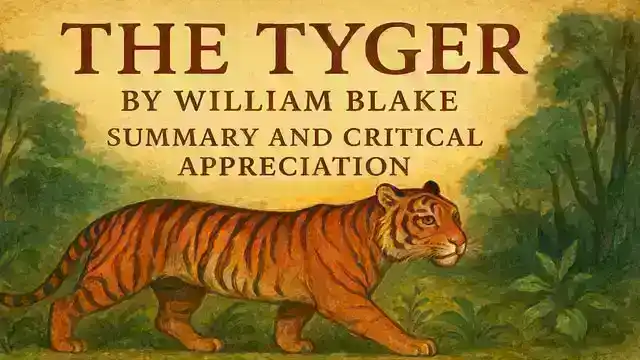
William Blake’s “The Tyger” is best understood in contrast with his companion poem “The Lamb.” While the lamb represents innocence, gentleness, and the beauty of God in His tender aspect, the tiger embodies a more complex and awe-inspiring vision of divinity.
Read more“The Lamb” by William Blake, Summary and Critical Analysis

William Blake’s “The Lamb”, one of the most celebrated lyrics from “Songs of Innocence”, captures the essence of purity, simplicity, and childlike faith.
Read more“The World Is Too Much with Us,” Summary and Critical Analysis

William Wordsworth’s sonnet “The World Is Too Much with Us” was first published in 1807 and later appeared in Miscellaneous Sonnets. Inspired by his direct observation of society, the poem reflects his disillusionment with the growing materialism of the nineteenth century.
Read moreOde on A Grecian Urn— Keats’ Philosophy and Medievalism
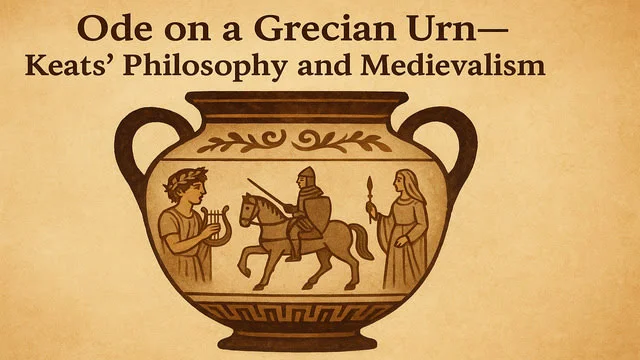
In this great ode, Keats presents an ideal philosophy of beauty based on truth. The urn represents it. The urn has a Grecian shape. It attracts the poet very much. It presents two lively pictures engraved on the urn. The pictures have the blessing of eternity.
Read moreWilliam Blake’s Poem London | Summary and Critical Analysis
In London, Blake gives his own view of life that "charter'd liberty" on which his countrymen prided themselves. He thus exposes the ugly facts of society.
Read more