Present in Absence by John Donne, Summary and Critical Appreciation
John Donne’s poem “A Valediction: Of Weeping”—frequently studied under the idea of being “present in absence”—is a fine example of his metaphysical style, where intense personal emotion is expressed through striking intellectual imagery.
Read more“On His Blindness” by Milton, Summary and Critical Appreciation

John Milton’s “On His Blindness” is an Italian (Petrarchan) sonnet, differing in form from the English sonnet.
Read moreSonnet 65 “Time and Love” by Shakespeare Summary and Critical Appreciation
Shakespeare’s Sonnet 65, often titled “Time and Love,” is one of his finest reflections on the power of time and the endurance of true love.
Read moreSonnet 116 “True Love” by Shakespeare, Summary and Critical Appreciation

Shakespeare’s Sonnet 116, often titled “True Love”, is one of his most celebrated poems on the nature of love. Addressed to Mr. W.H., the sonnet “True Love” explores the enduring and unchanging essence of genuine love.
Read more“On the Massacre” by Milton, Summary and Critical Appreciation
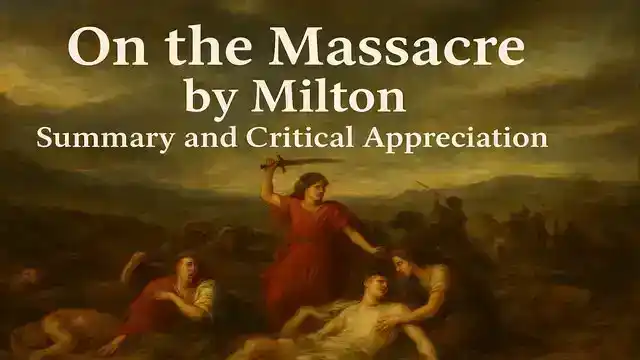
John Milton’s sonnet “On the Massacre in Piedmont” is inspired by a tragic historical event. In April 1655, the Duke of Savoy ordered the brutal massacre of around 400 people in Piedmont, who were persecuted for rejecting the traditional Roman Catholic faith.
Read more