Introduction “Death of A Bird”:
“Death of a Bird” by Keki N. Daruwalla is a narrative poem that tells the story of a man who, during the bird’s mating season, mistakenly kills a male monal. This single act sets off a chain of tragic events and leaves the hunter burdened with deep remorse.
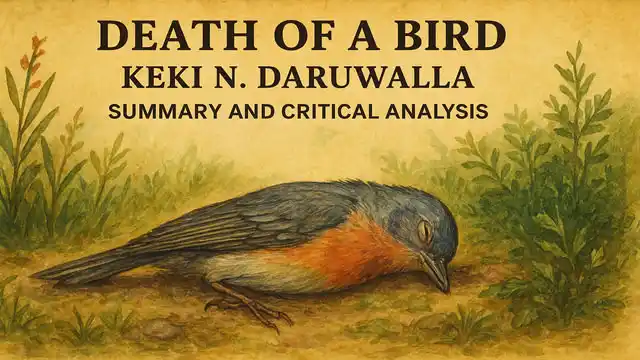
Through this incident, the poem delves into the themes of humanity’s destructive influence on nature, the fragile balance between life and death, and the emotional toll of violence. It suggests that such harm to nature invites a kind of cosmic punishment, symbolized by the death of the hunter’s pony and the sense of being cursed that follows. The poem echoes S. T. Coleridge’s The Rime of the Ancient Mariner in its portrayal of nature’s revenge for the unjust killing of an innocent creature.
Summary of the Poem “Death of A Bird”:
The Passionate Mating of the Monals:
The narrator, who was on a hunting expedition along with his female companion, entered a forest where two monals, male and female were passionately engaged in the act of mating beneath the projecting rocks. They seemed to be in a state of intense passion. Their manner of mating was very fierce and violent. Besides making violent movements and activities, they were screaming. The female bird was somewhat shy, passive and timid. It seemed as if she had no personality of her own or she had nothing distinctive or special while the male bird seemed to be the master of the situation. In fact the male bird had a domination nature. He (male bird) was the king.
The Death of the Male Bird:
The male bird wanted to imply his own whims in this game of love and sex-making. He wanted to involve in sexual act with his companion in a very aggressive way. The male bird could be compared to a dream of fire. The hunter (narrator) who carried a gun with him, took aim at one of the birds and fired. The hunter’s aim was accurate. The bullet hit the male bird. The male bird fell down on the ground. The bird was almost dead (it means that the bird was not actually dead, but it was on the verge of death) because its heart was throbbing.
The Cruelty of the Hunters:
The hunter (narrator) and his female companion felt no regret for their heinous act. Without any feeling of compassion, they picked up the dying male bird and mercilessly put into their bag. While doing so, they forgot all humanly feelings (such as the feelings of mercy, generosity and sympathy). They showed their hard heartedness in this act. The female bird was so much frightened and terrified that she began to utter loud cries.
The Departure from the Scene:
Feeling utter pain, she flew away from the crag where she was engaged with her companion in the act of love and sex making. After having killed the male bird, the hunter with his female companion moved on. They were carrying their bag with them in which the dying male bird was lying and was counting his last moments. The sky was being covered with mist and the narrator and his companion felt somewhat tired.
The Indifference of the Hunters:
Having killed the male bird and putting it into their bag which they were carrying with them, they, without feeling any regret and guilty at the commission of heinous act, moved on. They (the narrator and his female companion) did not ponder over their sin of killing the bird. It seemed as if they had no attachment with humanly feelings pity, sympathy and generosity. They seemed to be emotionless. They showed as they did nothing by killing the innocent male bird. They took this killing as their fondness of hunting. In their opinion it was not tyranny but it was only game for entertainment.
The Pony’s Fall:
They found that the sky was being covered by mist. They felt themselves somewhat tired. They also felt that their feet could not carry them further. But they kept on moving. Clouds were gathering on the crags. As their pony was also walking slowly, the hunter and huntress gave it a push to quicken its pace. They smote the pony on its shanks so it lost its balance and fell down the rock a thousand feet below, where the river was flowing with the sound of roaring.
The Death of the Pony:
When the hunter and huntress found that their pony was moving very slowly, they, without showing any mercy for the mute animal, smote on its shanks in order to make its pace fast. While doing so, they did not care the problem of the animal. They ignored the tiredness of the animal. But they had to bear the loss of cruelty. Their pony lost balance and it fell down the rock a thousand feet below.
After falling down into the river from a great height, it was seriously wounded. It felt severe pain. When its pain was unendurable it screamed loudly. Its scream fell into the ears of the hunters. They were horror stricken at this tragic incident. For some time, they were greatly stunned at the tragic death of their pony. But they did not take their pony’s death seriously. They felt somewhat disappointed, yet they continued their journey knowing that nothing important took place. They, after sometime, were consoled. They considered the pony as unimportant thing.
Journey Through the Forest:
After the tragic incident of the death of their pony, the hunter and the huntress felt little depressed, but they soon preserved themselves by thinking as if nothing important took place. They resumed their journey through the rocky way of the forest. It was evening. Bears and jackals were howling. It seemed as if they were looking for their prey and they wanted to get benefit of the growing darkness.
The hunter felt that the bears might be lurking behind the bushes in order to attack and capture their prey, so, in great fear, he fired his gun. He fired his gun at his confusion so he missed his aim each time. When jackals howled, his female companion asked if they were wolves, but he made no reply. He took her hand gently in his hand and they walked gently towards a cave which was surrounded by pine trees. The hunter found that there was less danger.
Fear and Confusion in the Wilderness:
It was evening and the darkness was growing thicker. They were passing through the dense forest of rocky area. After being recovered from the tragic incident of the death of their pony, they were moving on their journey. Physical tiredness was growing upon them. The way through which they were passing was full of wild animals such as the bears, jackals and wolves etc.
With the approach of evening and growing darkness, these wild animals were looking for the prey. They felt some noise behind the thick growth of the bushes. They thought that there might be some wild animal. So, under the effect of suspicion, the hunter fired his gun many times but in vain. Every time he missed his aim.
Finding Shelter in the Cave:
The female companion was much terrified. The hunter consoled her taking her hand in his. They moved on towards a cave surrounded by the pine trees. They might not have been able to find this cave if they had not seen a growling dog which had been left behind the resin-tappers to guard their cans containing the resin already collected by them. Nearby they saw more and more mist spreading and thickening.
The hunter lit a fire of turf and feat. He rubbed her clotted sides and feet in order to warm her. Their limbs came into a close contact but for some reason the inwardly felt somewhat apprehensive.
The Cold Night and Their Guiltless State:
The mist was spreading and thickening. With the thickness of the mist, the atmosphere around them also became cold. The woman began to shiver with cold. The man at once collected the dry grass and dry dung of animals and lit the fire. He rubbed her feet and other parts of her body which had become numb with extreme cold. When the woman was somewhat relaxed from cold, both of them decided to kill one more bird.
The hunter with her woman companion was ready with his gun to shoot the next and final prey. Neither of them had at this time any sense of guilt because they thought that they had done nothing wrong by shooting the bird, firing the bullets at the prowling bears and not lamenting at the tragic death of their pony. At this time both of them were guilt free. They felt no regrets at their heinous deeds of cruelty.
The Calm Night and Rest:
The atmosphere was now changing. It was growing dense dark. The woman put her head on the hairy chest of man so that she might feel warm from utter cold. The hunter held her hair tightly in his hand to give relax to himself and to his woman companion. As the woman felt warmth of man’s body she slept. Being tired, the man also slept. They were lost in their night dreams. The night kept advancing on its climax.
The moon made its appearance for an hour or two. The wings of the dead bird looked dark. The wolves seemed to have vanished and so did the mist. The man and the woman would have continued to dream of peace and of love if a wind had not begun to blow. The wind seemed to cause a great disturbance in the night. The loud sound of the blowing wind could be compared with the witch who moans loudly in pain. It is a belief among the people that when a witch feels great pain she begins to moan loudly.
Realisation and Repentance:
Being extremely tired and suffering from utter cold, the man and woman moved to a cave where they wanted to spend their night. The cold night was advancing. Both the man and the woman free from the sense of guilt and sin sat in the cave to relax themselves. While sitting bodily closed, both of them slept. Now there was calmness in the atmosphere of the night. They got sound sleep. They were lost in the dream of peace and love. The wind blowing loudly disturbed their sleep and this disturbance made them awake. During their sleep while wandering in the land of dreams, they (man and woman) came to realise their sin and guilty. Perhaps they repented at their heinous deeds. When they woke up, the man picked up his gun and broke it into two.
The Return of the Female Bird and the Curse:
Suddenly a brown bird rose higher from the crags. It flew with great force. While, flying very fast and with great force, it passed over the heads of the man and woman. When the bird saw these two persons sitting there, it shrieked with fear. Perhaps it thought these two persons to be responsible for the killing of its companion. Under the impact of utter fear and terror, it fell at the feet of the man and the woman. When the woman saw the bird lying on the ground beside their feet, she at once identified it and called upon man in great wonder by saying that it was the mate of the one which they had shot at the very outset when they (the male and female birds) were busy in love and sex making.
The Omen of Retribution:
The bird was lying beside their feet with its open eyes. It seemed as if it was dead or at the verge of death (was about to die). She expressed the view that now a curse would overtake them. She indicated to the eyes of the dead bird (or perhaps the dying bird) to tell the man that its eyes were still terror-stricken. The woman told the man that they would have to pay the penalty for having shot the male bird and having thus been indirectly responsible for the death of the female bird.
Critical Analysis of the Poem “Death of A Bird”:
Introduction:
The poem entitled Death of a Bird is the finest poem of K. N. Daruwalla. It depicts a hunting expedition. It reminds us of Coleridge’s famous poem The Ancient Mariner. It is a morally uplifting poem and may safely be classified as an excellent work of poetic art. It poignantly expresses the violent convulsions which disturb Nature’s cosiness, peace and sublimity, when someone dares taking away lives of innocent creatures. At this unlawful intrusion in Nature’s realm there is upheaval and untimely the evil does have to suffer the nemesis of guilt. The poem makes a powerful appeal to us. The poet’s purpose here, though not made explicit, is to show that there is some moral order in this universe.
Thought-Content:
The hunter (narrator) along with his female companion enters the forest. When they see a male bird and a female bird engaged in a sexual act, the man takes aim at the male bird and fires. The male bird falls down to the ground. The man and his companion pick up the dying bird and deposit it into a bag. The female bird, though not hit, is badly frightened and, feeling terrified and uttering cries, flies away from the crag. The man and woman walk on after killing the bird. They commit a sin by killing the male bird. Their pony walks slowly, the man and woman give it a push to quicken its pace. But the pony loses its balance and falls down into a gorge a thousand feet below where a river flows, making a loud noise as it flows. Without feeling any sorrow, the man and the woman resume their journey.
They find a cave to pass the night. As the woman feels very cold, the man lights a fire using dry grass and the dry dung of animals. He also rubs her sides and feet in order to warm her. Their limbs come into a close contact, but for some reason they inwardly feel somewhat apprehensive. Then they get ready to shoot one more bird, their last. Neither of them has any sense of guilt because they think that neither the scream of the pony, nor the death of a bird, nor the prowling bears at whom the bullets had been fired, represent any sinful acts committed by them. Both of them remain guilt- free.
The woman rests her head upon the man’s chest. During their sleep, they see the dream of peace and love. The wind blowing with loud noise disturbs their sleep. After waking up, the man breaks his gun into two pieces. A brown coloured bird rises from the crags flying with force and as, it passes over the heads of the man and the woman, it shrieks aloud and falls down dead on their feet. The woman recognises the dead bird as the Queen Monal. She feels that they are accused by the dead bird.
The Moral of the Poem:
The poem has a moral which shows that the natural forces of the universe turn against human beings if human beings go out their way to harm any creature-animal, bird, reptile, or even a tiny worm. However, the moral has not been preached in explicit terms. It reveals a moral vision.
An evil doer has to pay the penalty of his or her misdeeds. The woman feeling an expression of terror in the eyes of she-monal understands that a curse would fall upon them. She thinks that they are responsible for the death of two living monals.
Tinge of Poignancy of Love:
It is a love poem which expresses intense and self effacing love between two monals who mated, clawed and screamed under an overhang of crags:
“the female brown and nondescript
the male was a king, a fire dream!”
The hunter mercilessly killed the King (male) monal. The female monal rose in terror crying. The hunter and his beloved intensely desired to enjoy love in moonlit night but their dream of quiescence and love was upset by the moaning voice of the female monal whom the cruel hunter also killed in ‘an ash grey dawn’. His wife was terrified at the sight of the female monal nearly dead. Its eyes flared terror like hits of dripping meat. People who separate lovers can never enjoy the ecstasy of love. They have to suffer the nemesis of their guilt.
Profound Emotions, Repentance and Pathos:
Towards the dawn, the hunter overcome by some strange feelings breaks his gun its two. Perhaps-the hunter who killed the monal is struck with repentance and breaks his gun he killed the bird with. But just then a brown-coloured bird flies with great force from the crag where it had been sitting, and just when it passes over the heads of the two human beings below, it shrieks with fear and falls down at their feet. The woman below thereupon says that the bird, which has now died is the female and the mate of the male monal which had been shot dead at the very outset of the expedition. The woman adds that now a curse would befall them, meaning that they would have to pay the penalty for having shot the male bird and having thus been indirectly responsible for the death of the female bird:
“I broke my gun in two across the back
of an ash-grey dawn. A brown bird left the crags
flying strongly, and as its shadow crossed us.
it shrieked with fear and turned to stone
dropped at our feet.
“It’s the queen monal! we are accused !”;
she said
‘Just watch its eyes!’ for though the bird
was near dead
Its eyes flared terror like bits of dripping meat!”
The Poem, Full of Incidents and Suspense:
In the poem we have both incident and suspense which are two of the most striking characteristics of Daruwalla’s poetry. The first incident in this poem is the killing of a male monal at a time when the bird was mating with its female. The man takes aim at the male bird and shoots it down. The next incident is the death of the pony. The man and woman push the animal merely to quicken its pace, but it loses its balance and falls down a thousand feet below into a roaring river.
At evenfall, all kinds of jungle-noises are heard, indicating the presence of animals of various kinds, some of them dangerous. The man lights a fire to provide some warmth and comfort to his female companion. Towards the dawn, the man, overcome by some strange feeling, breaks his gun into two. Just then, a brown-coloured bird flies with great force from the crags. Flying strongly as it passes over the heads of the two hunters, it fearfully shrieks aloud and falls down on their feet.
Style and Language of Poem:
The poem is in the narrative farm which is artistically and coherently developed. It is an artistic poem, remarkable for stylistic qualities and chaste apt and highly suggestive diction. The poet’s use of chiselled phrases and picturesque colour-wards contribute the artistic excellence of the poem. For instance, “fierce bird-love”, “the monals mated, clawed and screamed”, “his eyes were glazed, the breast still throbbed”, “pimpling like a spray of cysts”, “a passion of dusky gold and blue”, “dream of quiescence and love”, “like a witch in the flute”, and “the wolves, with the mist, went over the cliff.”
The poem is also remarkable for its dramatic quality. In fact, each incident has a dramatic quality. The climax of the dramatic moment reaches in the last stanza when the female monal falls dead beside the feet of the hunter and huntress:
“It’s the queen monal! we are accused!’;
she said
“Just watch its eyes !’ for though the bird was
near dead
Its eyes flared terror like bits of dripping meat!”