Poem Church Going by Larkin, Summary and Critical Appreciation
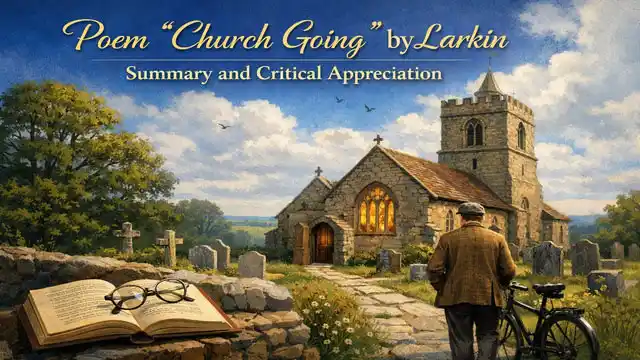
Introduction of the Poem “Church Going”: The poem “Church Going” was published in Philip Larkin’s second collection, The Less Deceived, and was composed in 1954, a period marked by a noticeable decline in church attendance. The poem establishes Larkin as an agnostic and reflects his questioning attitude towards religious belief. It explores the enduring role of religious institutions ...
Read moreTo The Moon by Thomas Hardy, Summary and Critical Appreciation
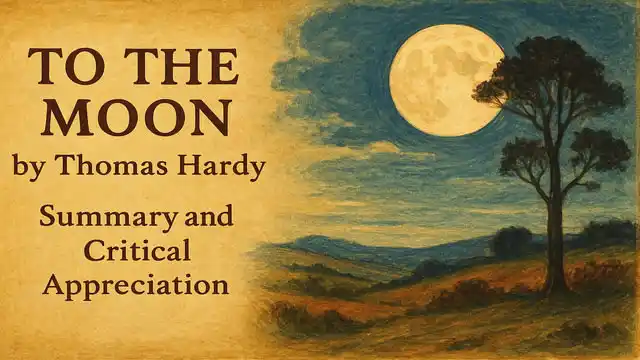
“To the Moon” is a lyric poem by Thomas Hardy in which the poet addresses the moon as a silent witness to human suffering, disappointment, and emotional isolation.
Read moreWordsworth Is A Didactic Poet
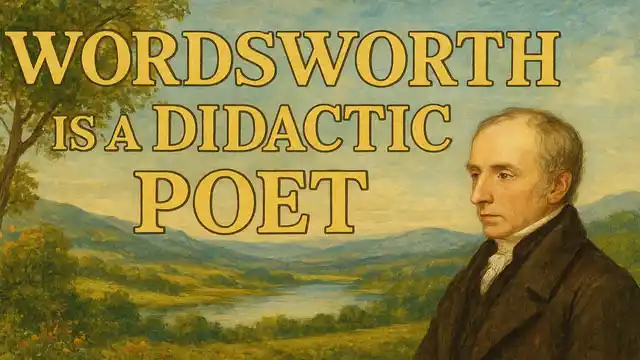
William Wordsworth is one of the central figures of the Romantic Movement. Wordsworth is a didactic poet because of the moral and philosophical purpose that underlies his poetry.
Read moreT.S. Eliot A Modern Poet
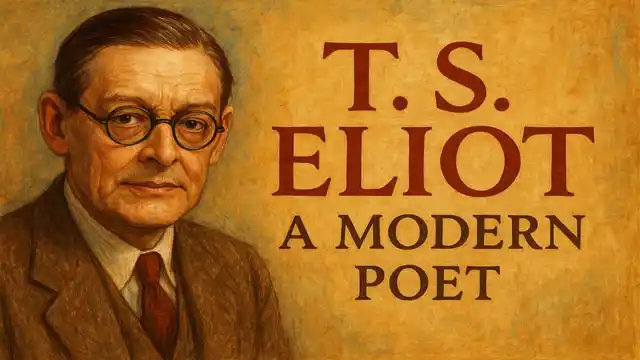
T.S. Eliot a modern poet was an American by birth. He became a naturalised British Subject in 1927. His contribution to English poetry has been substantial and solid.
Read morePoetic Style of Eliot

Eliot was a great poet. Poetic style of Eliot is remarkable. He therefore employed unconventional techniques which are peculiarly his own.
Read moreNeutral Tones by Thomas Hardy, Summary and Critical Analysis
“Neutral Tones” is one of Thomas Hardy’s most poignant and restrained lyric poems, first published in 1898 in his collection Wessex Poems.
Read moreExtensive and Purposeful Use of Symbols by T.S. Eliot in His Poetry

Extensive and purposeful use of symbols by T.S. Eliot in his Poetry is a defining feature, through which he conveys profound ideas about modern life, spiritual emptiness, time, memory, and the search for meaning.
Read moreMyths Used by T.S. Eliot in His Major Poems

Myths used by T.S. Eliot in his major Poems is one of the most distinctive and influential features of his modernist poetry.
Read moreOde On a Grecian Urn —Summary and Critical Analysis
“Ode On a Grecian Urn” is one of the finest odes of Keats. Keats wrote it in the same circumstances in which he wrote another great Ode to a Nightingale.
Read moreNature and Man in the Poems of Thomas Hardy
We find nature and man in the poems of Thomas Hardy. Thomas Hardy's love of nature is evident in his keen and accurate observation of natural scenery and natural phenomena.
Read more